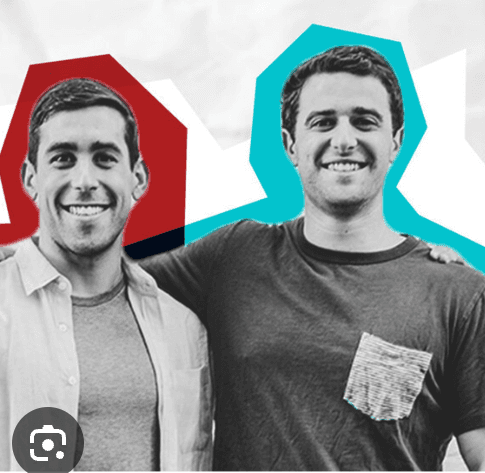
How Starter Story's Marketing Strategy Turned $181 Into $100K/Month
$100K+
Revenue/mo
Business Type
Content/Media
Monetization
Subscription
Founded
2017
The Starter Story Breakdown
There's this weird thing that happens to founders. They spend months perfecting their product. Polishing every detail. Making it absolutely pristine. And then... nobody cares.
Pat Walls learned this the hard way.
Before Starter Story, he and his cofounders built a B2B SaaS app. They spent their days at their day jobs, then nights and weekends grinding on this product. They dreamed about Y Combinator. They dreamed about venture funding. They dreamed about making it big.
But nothing happened. Traffic? Zero. Customers? Zilch. So they shut it down.
Instead of giving up on entrepreneurship entirely, Pat did something smarter. He looked at what was actually working online and noticed a gap. There was a website called Indie Hackers that published real stories from founders. But even that wasn't quite right. Most entrepreneurship content came from major publications like Forbes, and it only focused on the 1% of companies that raised massive VC funding.
What about the normal people? The ones who built profitable businesses without VC? The ones who just wanted to sustain their lifestyle?
That's the idea that sparked Starter Story in late 2017.
Pat walls, starter story

$0 Revenue
Pat didn't start with a perfectly polished site. He didn't wait for "the right time." He literally wrote three case studies, published them, and that was it.
Three.
Most founders would overthink this. "But the site isn't ready! I need more content! The design needs work!"
Pat just shipped it.
The site was quiet at first. Barely anyone visited. But then something interesting happened. The founders he interviewed started sharing their case studies on social media. And a few of his posts on Reddit started getting traction.
Then one post hit the top of r/Entrepreneur subreddit. Over 100,000 views.
This is where distribution beats everything. Pat's early success wasn't because he had the world's best case studies. It was because he figured out where his audience already hung out and put his content in front of them.
The Reddit Flywheel (Months 1-18)
Pat's early tactic was straightforward, but it worked beautifully.
He'd post complete case studies on Reddit. Not spammy links. Not self-promotional garbage. Just full, valuable content in relevant subreddits like r/Entrepreneur. He followed the community rules. He didn't spam. He just genuinely contributed.
Here's the key insight he discovered: Boring product + Large amount of money = Content that blows up.
Think about it. A 25-year-old making $50K a year from dropshipping? Boring business. But the numbers? That's what people want to see. How much money is actually being made?
Most entrepreneurship content hides the revenue numbers. That's what made Starter Story different from day one. The transparency was the hook.
By month 6, he'd published 142 blog posts and made his first $181.26 in revenue. Not exactly life-changing money, but it proved there was demand.
By month 12, Starter Story hit 439,856 pageviews and was generating $1,700 per month.
The flywheel was real. Founders saw their stories on Starter Story, shared them with their audiences, which drove more traffic back to the site. More traffic meant more people wanted to submit their stories. More stories meant more content to share on Reddit. And the cycle continued.
But here's the problem with Reddit: It's not scalable.
Reddit is great for early traction, but it has a ceiling. You can only post so much before the algorithm stops promoting your content. The community gets tired of you. Mods shut you down.
By 2019-2020, Pat realized he needed a new engine for growth. He'd built a neat little community, but he hadn't built a sustainable business yet.
.png&w=3840&q=75)
Please sign in to continue reading
We do this to make sure real humans read our stuff, not bots.