

Content Marketing Lead Generation: The Unglamorous Way to Fill Your Pipeline

The Case
Look, I'm going to be straight with you. Most companies suck at content marketing for lead generation. They create stuff, push it out there, and then wonder why their inboxes aren't overflowing with qualified prospects.
The problem isn't that content marketing doesn't work. It absolutely does. The problem is that most businesses treat content like a one-off tactic instead of a system.
They publish a blog post and expect leads to flood in. They create a whitepaper and act shocked when only 4 people download it. They miss the fundamentals entirely.
This article is for people who want to do it right. Not perfectly—right. Because perfection is the enemy of progress, but a solid, systematic approach to content marketing for lead generation? That's the thing that actually works.
Why Content Marketing Generates the Leads You Actually Want
Before we dive into the how, let's talk about the why.
Content marketing works for lead generation because it does something traditional advertising doesn't: it attracts people who've already self-qualified themselves.
When someone lands on your blog because they searched "how to reduce customer churn," they're not a cold lead. They've already identified a problem. They're looking for answers. They're actively seeking information related to your industry.
This is radically different from interrupting someone with an ad. You're not disrupting their day; you're providing exactly what they're looking for.
The second reason content works is trust. When you consistently provide helpful, honest information, people start to see you as someone who knows what they're talking about. And when someone trusts you, they're far more likely to become a customer.
Think about it: would you rather be sold to by a stranger, or guided to a decision by someone who's already helped you multiple times?
The third reason is time. Content shortens your sales cycle. By the time a prospect actually fills out a form or requests a demo, they already understand their problem, they know you have a solution, and they're genuinely interested. Your sales team doesn't have to start from zero.
.png&w=3840&q=75)
Step 1: Know Your Audience Before You Create Anything

This is where most people fumble.
They skip straight to content creation without actually understanding who they're creating for. Then they wonder why nobody cares.
Your first job is to build detailed buyer personas. Not vague ones. Detailed ones.
What goes into a real buyer persona?
- Job title and industry: Who are they? What company size do they work for?
- Pain points: What keeps them up at night? What problems are they actively trying to solve?
- Goals and priorities: What are they trying to achieve professionally?
- Buying process: How do they make decisions? Who influences them?
- Information-seeking behavior: Where do they get information? What blogs do they read? Are they on LinkedIn?
Don't guess at this. Talk to your current customers. Review your sales CRM. Run surveys. Look at your web analytics to see where traffic is coming from.
The more specific you can get, the better your content will perform. It's the difference between trying to appeal to "businesses" and appealing to "heads of customer success at SaaS companies with 20-100 employees who've been in their role for 1-3 years."
Once you understand who you're talking to, map their buying journey:
- Awareness: They've identified a problem
- Consideration: They're researching solutions
- Decision: They're choosing between options
Each stage needs different content. And that leads us to the next part.
Step 2: Build Your Content Across the Entire Funnel (Not Just the Bottom)
Here's where people really mess up.
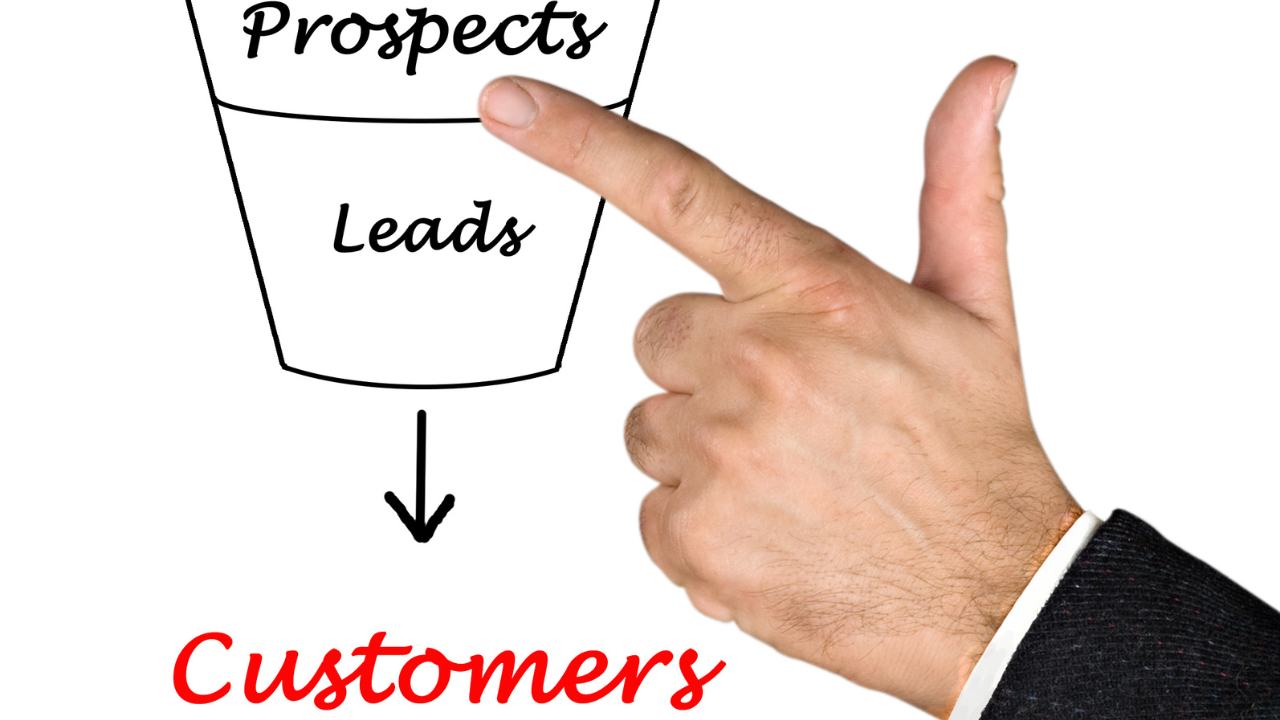
They create a bunch of bottom-funnel content—demos, trial offers, pricing pages—and then act confused when nobody's actually in the funnel to convert.
You need content at all three stages. Let me break down what that looks like:
Top-of-Funnel Content (TOFU): Build Awareness
This is where you cast a wide net. These are the pieces that help people who don't even know they have a problem yet, or who are just starting to think about it.
Types of TOFU content:
- Blog posts on industry trends or general topics
- Social media content (LinkedIn posts, tweets)
- Educational videos
- Infographics
- Podcasts
The goal here isn't to convert leads (yet). It's to get eyeballs on your content. It's to start building trust. It's to rank on Google so people can find you.
Example: If you sell project management software, a TOFU blog post might be "Why Most Teams Fail at Project Planning" not "Try Our Project Management Software Free."
Middle-of-Funnel Content (MOFU): Educate & Nurture
Now someone knows they have a problem. They're researching solutions. This is where you educate them and build your credibility.
Types of MOFU content:
- In-depth guides and whitepapers
- Case studies
- Webinars
- Comparison articles
- Templates and checklists
- Email nurture sequences
MOFU content is where gated content lives. You're offering something valuable—a detailed guide, a template, an assessment—and in exchange, people give you their email address.
This is how you actually capture leads.
Example: A free whitepaper titled "The Complete Guide to Project Planning for Remote Teams" would live here. It's valuable enough that someone will give you their email for it.
Bottom-of-Funnel Content (BOFU): Convert
Someone's made a decision to buy something. They're just deciding whether it's you.
Types of BOFU content:
- Product demos
- Free trials
- ROI calculators
- Detailed pricing pages
- Customer testimonials and success stories
- Consultant or sales calls
BOFU content is for people who are ready. It's why low-traffic, high-specificity content here is perfectly fine. You're not trying to reach everyone; you're trying to close the right people.
Example: A case study showing exactly how a similar company used your software to cut project planning time in half.
The key insight: Different content for different readiness levels prevents wasted effort.
Too many companies focus all their energy on BOFU content and wonder why they have no leads. You need all three to build a sustainable pipeline.
Step 3: Design Lead Magnets That Actually Convert
Okay, so you're going to gate some content. The question is: what kind of content actually gets people to fill out a form?
Not all lead magnets are created equal.
Research from 2025 shows that interactive content converts significantly better than static PDFs.
Here are the real conversion rates:
- Interactive calculators, assessments, or quizzes: 6-8% conversion rate
- Checklists and templates: ~34% conversion rate
- Standard PDFs and eBooks: 3-4% conversion rate
- Webinars: ~4.1% conversion rate
Why does interactive content win? Because it's engaging. It requires interaction. The user has skin in the game. They're getting personalized results.
A PDF? Anyone can skim it and close the tab. A quiz or calculator? They have to commit to it.
The form field rule: Less is more
Here's something that matters more than people think: the number of fields on your form.
Research shows that reducing form fields from 4 to 3 increases conversions by approximately 50%. From 5 to 4? You're still seeing major improvements.
Ask yourself: what do I actually need to know right now? Probably just name, email, and maybe company size. You can collect everything else later.
Match the magnet to the funnel position
Again, not all lead magnets are created equal. And they shouldn't be in every stage.
- TOFU magnets: Low commitment, high value. Quick wins. A short checklist. A single template. The goal is to build your email list.
- MOFU magnets: Medium commitment, deeper value. Whitepapers, guides, webinars. You're asking for more commitment because you're offering more value.
- BOFU magnets: Higher commitment. Free consultations. Custom ROI calculations. Access to a specific resource. At this point, people are already interested; you're just removing their last objection.
The hybrid approach: Stack your lead magnets
Here's a tactic that actually works: layer your lead magnets.
Someone lands on your site and sees a pop-up offering a quick assessment. They fill it out (2 minutes, 5 fields). The result is personalized, and they get an email immediately saying "Based on your responses, here's a detailed guide built specifically for you."
Now they're on your email list. Two days later, they get another email with a related resource. Three days later, a webinar invitation.
This multi-step approach increases conversion by 2.7x compared to a single lead magnet.
The magic isn't in one piece of content. It's in the sequence.
Step 4: Optimize for Discovery (So People Actually Find Your Content)
You can create the most brilliant content in the world, but if nobody finds it, it doesn't matter.
This is where SEO comes in. And no, I'm not going to bore you with a 5,000-word SEO guide. Just the fundamentals.
Keywords: Target what people are actually searching for
Use Google's Keyword Planner or similar tools to find what people are actually searching for related to your industry.
Don't target "project management." Target "how to manage a distributed team's projects" or "project planning for small teams."
Long-tail keywords (the longer, more specific ones) are easier to rank for and usually indicate higher intent.
On-page basics
- Title tags: Make them clear and keyword-forward. "The Complete Guide to Project Planning for Remote Teams" beats "Project Planning."
- Meta descriptions: 155-160 characters. Make them enticing.
- Headings: Use H2s and H3s to break up content and signal what the page is about.
- Internal links: Link to related content on your site. It helps with SEO and user experience.
Multimedia matters
Video content ranks 50x better on Google than plain text.
Include videos where it makes sense. Include relevant images. Include infographics if your topic lends itself to them.
Distribution: Don't expect organic traffic alone
Organic search is great, but it takes time. You need to actively distribute your content.
- Email: Send it to your list. Segment it by interest if you can.
- LinkedIn: Post about it. Share it in relevant communities.
- Paid ads: Retargeting ads to people who've visited your site but didn't convert.
- Partnerships: Reach out to relevant publications, industry influencers, or partners.
- Social media: Repurpose it into snippets for Twitter, Instagram, TikTok, etc.
Email shows the highest conversion rates across all distribution channels, so if you have an email list, prioritize that.
Repurposing: One piece, many formats
One long-form blog post can become:
- A shorter, shareable summary for social media
- A video explainer
- An infographic
- A podcast episode
- A series of LinkedIn posts
- A webinar
You're not creating 5 separate pieces of content. You're creating one really good piece and distributing it in multiple formats. This multiplies your reach without multiplying your workload.
Step 5: Nurture Leads Systematically (This Is Where Most People Fail)
You've built your funnel. You've created great content. You've captured a lead.
Now what?
Most companies do nothing. They sit around waiting for the lead to contact them.
This is backwards.
You should have an automated system in place that nurtures leads before they're ready to buy. The goal is to stay top-of-mind and build trust over time.
Set up email sequences triggered by actions
When someone downloads a lead magnet, they shouldn't just get a thank you email. They should get a sequence:
- Email 1 (immediate): Deliver what they requested + introduce yourself
- Email 2 (2 days later): Provide related, helpful content
- Email 3 (5 days later): Tell a story about how you've helped similar customers
- Email 4 (1 week later): Offer something of higher commitment (webinar, consultation, etc.)
Each email should provide value. You're not selling. You're educating and building trust.
Segment your leads
Not all leads are the same. Someone interested in "project planning for remote teams" needs different content than someone interested in "project planning for agencies."
Segment your email list by:
- Interest: What topic did they download about?
- Company size: Are they at a startup or enterprise?
- Firmographic data: Industry, role, etc.
- Behavior: How are they engaging with your content?
Then send different sequences to different segments.
Lead scoring: Know who's ready
Not all leads are created equal. And you don't want your sales team chasing people who aren't ready to buy.
Lead scoring is simple: you give points based on actions.
- Downloaded a whitepaper: +5 points
- Attended a webinar: +10 points
- Opened 5+ emails: +3 points
- Visited your pricing page 3+ times: +15 points
- Visited your demo page: +20 points
Once someone hits a certain score (let's say 50 points), they're "sales qualified" and your sales team reaches out.
This automates the process of identifying who's actually ready to talk to sales.
Automation tools do the heavy lifting
You don't have to send emails manually. Tools like Leadpages, HubSpot, Klaviyo, or ActiveCampaign can automate this entire process.
You set up the sequence once, and it runs automatically for every new lead that comes in.
The beauty? You can set up a system that nurtures leads while you sleep.
Step 6: Measure What Actually Matters

You can't improve what you don't measure.
But here's the thing: most people measure the wrong stuff.
Page views, blog post shares, email open rates—these are vanity metrics. They feel good, but they don't tell you if your content is actually generating leads and driving revenue.
The metrics that actually matter
- Website traffic by source: Where are your visitors coming from? (Organic, paid, email, social, referral?)
- Conversion rate: What percentage of visitors to your site are filling out a form?
- Cost per lead: How much are you spending to acquire each lead?
- Lead-to-customer rate: What percentage of your leads actually convert into paying customers?
- Revenue per customer acquired through content: Track this back to the original content piece.
- Time to conversion: How long does it take for a lead to become a customer?
- Engagement metrics: Time on page, scroll depth, clicks. These indicate content quality.
Use Google Analytics (or similar)
Set up goals in Google Analytics to track conversions. Tag your emails with UTM parameters so you can see which campaigns are driving traffic.
Use Perspective's CRM and analytics to track which content performs best, and you'll get even more detailed insights into your funnel.
A/B test constantly
Pick one element and test it:
- Landing page headlines: Does "How to Manage Remote Teams" or "The Remote Team Manager's Handbook" convert better?
- Form fields: Does asking for phone number decrease conversions?
- Email subject lines: Do personal subject lines get higher open rates?
- Call-to-action button text: "Download Free Guide" vs. "Get Instant Access"?
Test one thing at a time. Run it for at least a week or until you have meaningful data. Document what works.
Small improvements compound. A 2% improvement in conversion rate here + a 5% improvement in email open rate there = a materially different result over a year.
Step 7: Close the Feedback Loop With Sales

Your sales team is sitting on a goldmine of information.
They talk to prospects every day. They know which leads are qualified. They know what messaging resonates. They know what objections come up over and over.
And most marketing teams never ask them.
Don't operate in a silo. Have a monthly call with sales. Ask:
- Which content pieces are the leads mentioning?
- What questions are coming up repeatedly?
- What messaging seems to land?
- What are we missing?
Use this feedback to refine your content strategy. If 80% of your leads are asking the same question, create content that answers it.
Your customers are also valuable. After someone converts, ask them: "What content helped you decide?" You might be surprised at which pieces actually influenced the decision.
Step 8: Stay Ahead of Trends (But Don't Chase Shiny Objects)

The landscape is always shifting. A few things worth paying attention to in 2025:
Personalization at scale
AI is enabling personalization in real-time. Tools can now look at a visitor's behavior and automatically serve them personalized content.
Instead of showing everyone the same homepage, you can show software engineers one version and product managers another. Based on their actual behavior and interests.
This doesn't need to be creepy. It's just being helpful.
Voice search optimization
More people are talking to their devices. This means your content needs to answer conversational queries.
Instead of stuffing keywords, think about how people actually ask questions. "What's the best project management software for remote teams" instead of "project management software remote teams."
Shorter sentences. Direct answers. Content that sounds like a conversation, not a textbook.
Interactive and video content
Interactive content like quizzes and calculators outperforms static content. Video is consumed at higher rates than text.
This doesn't mean you need to become a video production company. But it does mean investing in some interactive tools and video content is probably worthwhile.
Privacy and trust
People are increasingly aware of what they're sharing and why. Being transparent about data practices is now table stakes.
Be clear about what data you collect, why you collect it, and how you'll use it. Use first-party data (data people willingly share with you) instead of sketchy third-party data.
Build trust, and people will give you their information.
Your Action Plan: Start This Week
You don't need to do everything at once.
Here's what to do this week:
Day 1-2: Identify your top 2-3 buyer personas. Talk to 3-5 current customers or sales people. Write down their pain points.
Day 3-4: Audit your existing content. What pieces are getting traffic? Which are converting leads? Which are just noise?
Day 5: Identify one gap. One question your personas are asking that you don't have content for. Outline a blog post or guide to answer it.
Day 6-7: Create that content. Don't obsess over perfection. Get it out there.
The next week, set up one email nurture sequence. Literally just 4 emails. Document it so you can replicate it.
The week after, add a simple lead magnet to your site (a checklist, template, or free tool).
You're not trying to build the perfect machine overnight. You're building one piece at a time. But if you start with this foundation—understanding your audience, creating relevant content, capturing leads, and nurturing them systematically—you'll have a machine that works.
Content marketing for lead generation isn't glamorous. It's not a hack or a shortcut. But it's one of the most reliable ways to build a sustainable pipeline of interested, qualified leads.
Start today. Get slightly better tomorrow.
That's all you need.
Share this playbook
Grow your business without guessing.
Weekly breakdowns of real businesses and their exact marketing strategies driving growth.
Read by 11,000+ founders & marketers.