
The Marketing Strategy Behind Athletic Green's $600 Million Empire
$50M
Revenue/mo
Business Type
E-commerce
Monetization
Subscription
Founded
2010
Introduction
Imagine creating a product to fix your own health problems, then watching it grow into a $1.2 billion company. That's the story of Athletic Greens, now known as AG1. The company went from zero revenue in 2009 to an impressive $600 million in annual revenue by 2024—all while selling just one product. What makes this even more remarkable is that they achieved this growth without relying on expensive retail stores or complicated distribution networks. Instead, they built a loyal customer base directly online.
This research article breaks down exactly how Athletic Greens grew their business, what marketing strategies they used, and why customers keep coming back for more.
The Beginning
Chris Ashenden's Health Journey
Chris Ashenden, a New Zealander with an entrepreneurial spirit, founded Athletic Greens in 2010. But this wasn't just another business idea he dreamed up. It started with a real health crisis. In 2008, Ashenden was suffering. He was getting sick frequently—four times a year with upper respiratory tract infections that required antibiotics. He was constantly tired, and nothing seemed to help. After being frustrated with traditional medicine, he flew to a specialized clinic in the United States for comprehensive health testing.
What he discovered changed everything: his body wasn't properly absorbing nutrients. Instead of accepting this, Ashenden took action. He assembled a team of experts—naturopaths, clinical researchers, and forward-thinking doctors—to create something that didn't exist: a single supplement that would contain everything his body needed.
Building the Formula
Rather than copying what already existed, Ashenden and his team set out to create the ultimate all-in-one supplement. The result was a powder containing 75 vitamins, minerals, and whole-food sourced nutrients. The idea was simple: take one scoop per day, and you'd cover your nutritional bases. When Ashenden first tested this formula on friends and colleagues, people loved it. Within 10 days of putting everything into one scoop, he knew he had something special. When other people tried it and wanted more, he knew he was onto something bigger.
The Bootstrapping Years
Here's what makes Ashenden's story different from most tech startups: he didn't go looking for venture capital funding. In fact, he bootstrapped the company for 12 years before taking outside investment. This might seem crazy, but it forced Ashenden to think differently about business. He learned to build things efficiently, focus ruthlessly on what customers wanted, and avoid expensive mistakes. By 2021—11 years after launch—Athletic Greens had grown to $160 million in annual revenue without a single external investor.
The Growth Story
Phase 1: The Organic Beginning (2009-2013)
Athletic Greens started small. In the early days, Ashenden focused on getting the product into the hands of influencers and health experts—people like nutritionists, fitness trainers, and wellness coaches who could genuinely recommend it to others.
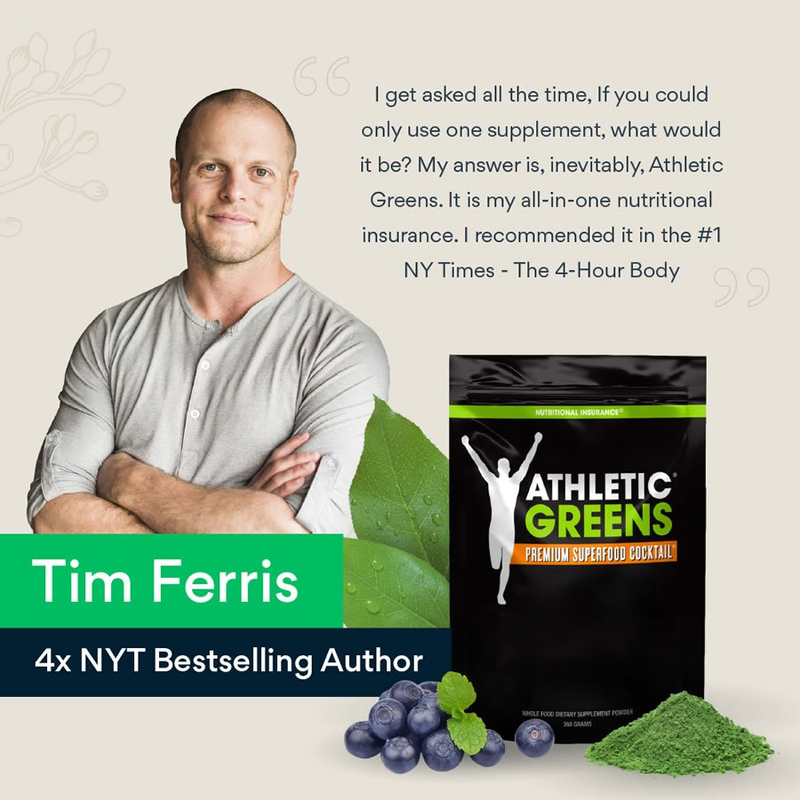
This strategy worked. One of the earliest and biggest breaks came when bestselling author Tim Ferriss, who was an early user of Ashenden, mentioned it in his 2010 book "The 4-Hour Body."
 source: the pati group
This organic endorsement from a well-respected figure gave the young company massive credibility without costing a dime in advertising.
Phase 2: Building the Business Model (2014-2016)
Around 2014, Athletic Greens introduced a subscription model. This was a game-changer. Instead of customers buying one container whenever they ran out, they could subscribe to receive a fresh container every month (or on their preferred schedule). This created predictable, recurring revenue.
The subscription model also encouraged customer loyalty. People who subscribe are more likely to keep using the product and less likely to try competitors. They simply forget they even have a subscription and keep receiving it.
Phase 3: Going Digital (2017-2019)
In 2017, Athletic Greens moved their entire e-commerce operation to Shopify Plus, a more powerful platform designed for fast-growing brands. This allowed them to handle more customers, personalize the buying experience, and optimize their website for sales. During these years, they also invested in targeted ads, email marketing, and content creation. The company was building brand awareness and learning what marketing messages resonated with different types of customers.
Phase 4: The Big Breakthrough (2020-2022)
After 12 years of bootstrapping, Athletic Greens decided it was time to bring in outside investors. In July 2021, they took their first major investment from strategic investors including Lewis Hamilton (the famous Formula 1 driver) and Shawn Johnson (an Olympic gold medalist). Then, in January 2022, the company raised $115 million in funding, which valued the company at $1.2 billion. For the first time, Athletic Greens had serious capital to spend on growth. What happened next was explosive:
-
Revenue jumped from $160 million (2021) to approximately $200%+ year-over-year growth
-
Customer growth exceeded 100% year-over-year
-
The company tripled its workforce from around 150 people
Phase 5: The Rebrand and Expansion (2023-Present)
In 2022, the company made a bold move: they dropped "Athletic Greens" and rebranded to simply "AG1." Why? Because the product is about foundational nutrition for everyone, not just athletes. The new name was shorter, more memorable, and better reflected the company's mission. The visual rebrand was equally dramatic. Working with design studios Creech and later The New Company, AG1 completely overhauled its packaging, logo, and brand identity. The new design felt more premium, more scientific, and more trustworthy. The packaging itself became an experience—when new customers received their first shipment, it included premium unboxing elements that made customers feel like they'd received a special gift.
By 2024, AG1 reached $600 million in annual revenue—a remarkable achievement for a company selling a single product.
.png&w=3840&q=75)
Please sign in to continue reading
We do this to make sure real humans read our stuff, not bots.