
The Genius Marketing Strategy Behind Dollar Shave Club’s Viral Video
$8.7M
Revenue/mo
Business Type
E-commerce
Monetization
Subscription
Founded
2011
How it started
A story about fixing a stupid problem nobody else bothered to solve.
Here's the annoying thing about buying razors: they're overpriced, locked in plastic cases at drugstores, and you have to go buy them constantly.
Michael Dubin noticed this was ridiculous. So in 2011, he had a dumb-simple idea: what if we just mailed good razors to people for $1 a month?
His friend said it wouldn't work. Investors initially weren't interested. But then Michael did something brilliant that changed everything.
The $4,500 Viral Moment
On March 6, 2012—four years before Instagram became the dominant marketing channel—Michael Dubin walked into a warehouse with a camera crew and spent $4,500 to film a 90-second video.
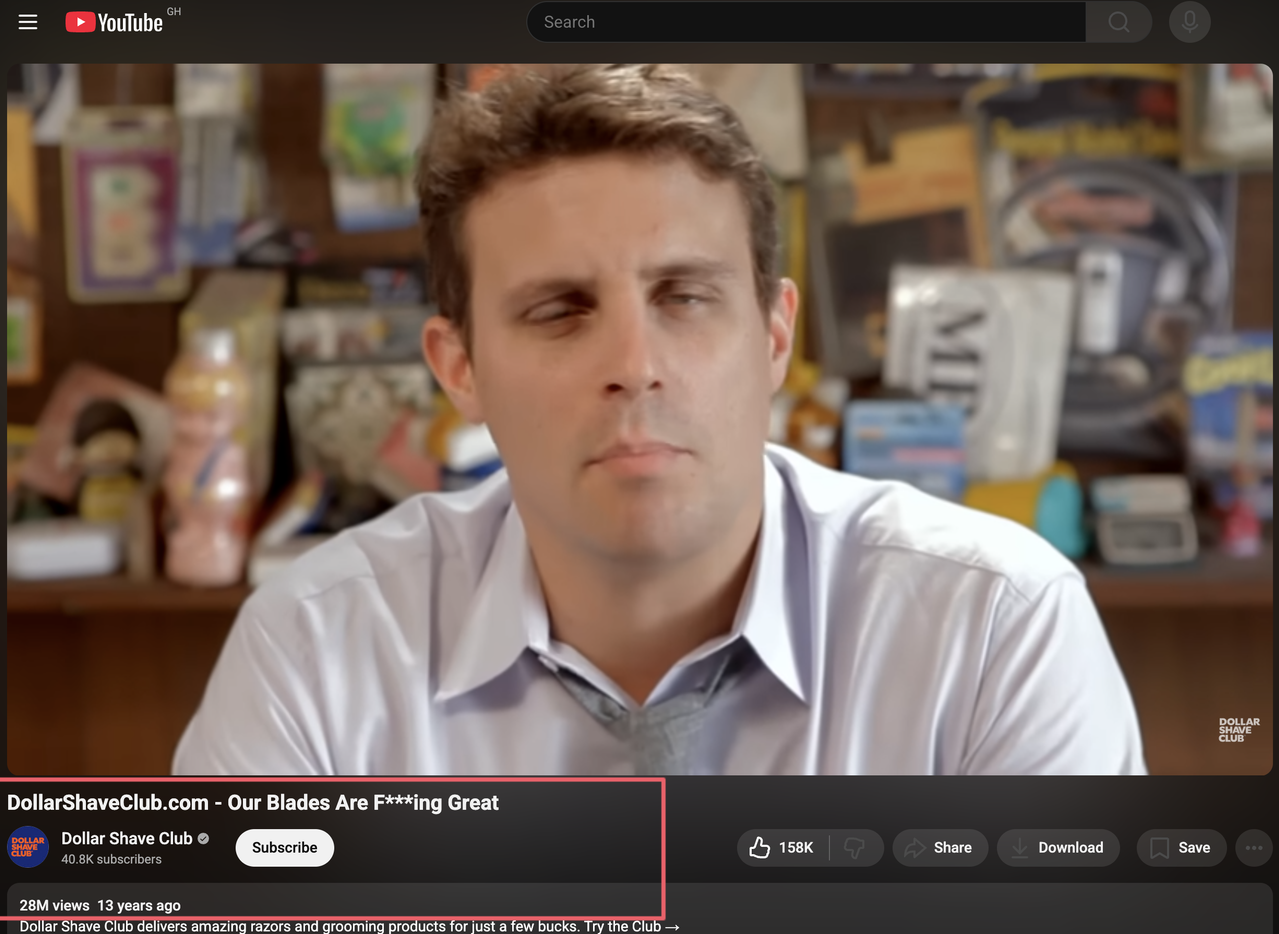
That video changed the entire shaving industry.
It opened with a simple shot: Michael striding through the warehouse with a deadpan expression, saying: "Is our blades good? No. Our blades are f**ing great."*
For one minute and thirty seconds, Michael did something that every other razor company was afraid to do. He told the truth in a funny way.
Traditional razor ads showed men with perfect stubble and perfect lives. Dollar Shave Club showed a guy in a warehouse explaining why those ads were stupid.
"You don't need a stupid multi-blade razor," the video basically said. "You need a sharp blade. We'll mail it to you. It costs $1. Done."
Within 48 hours, 12,000 people signed up. The website crashed from the traffic. When it came back online, customers were placing orders faster than the team could pack boxes by hand.
By the end of the first week, 3 million people had watched a video made for the cost of a decent dinner.
By today, it's been viewed 28 million times.
Why This Video Worked When Nothing Else Did
Most advertising is forgettable because most advertising is made by people trying to avoid blame, not trying to change minds.
Dollar Shave Club's video worked because it did three specific things:
1. It revealed the actual problem. Gillette spent billions positioning razors as status symbols. Dollar Shave Club pointed out that people just want sharp blades that don't cost $20. That's not revolutionary—it's obvious. But because nobody else said it, it felt revolutionary.
2. It showed the price before explaining full value. This sounds like bad marketing advice, but it's actually genius psychology. When Michael says "$1 a month" in the first 10 seconds (before explaining what you're getting), your brain gets confused. "Wait, $1? For what?" That confusion keeps you watching. Your brain wants resolution. 3. It made fun of the alternative. At the end, Michael points out that Gillette razors cost $15-20, and mentions that "19 of those dollars go to Roger Federer." He didn't say "our blades are cheaper." He said "you're being ripped off by the status quo." Humans hate feeling like they're losing money more than they like saving money. This video tapped into that.
But Here's The Part That Really Matters
The viral video was the spark. The actual business model was the fuel.
The Business Model: Loss Leader + Upsell
The $1 razor plan wasn't profitable. It was a trap—an incredibly smart one.
Here's how it worked:
You sign up for $1/month and receive a razor handle plus razors. That's genuinely cheap. But then you get a welcome email offering add-ons: shaving cream, aftershave, skincare products. Each add-on was positioned as a limited-time offer, creating urgency.
The result? 69% of customers made an additional purchase in their first month. Once customers were in the door, they upgraded their razor tier. Most people didn't want the $1 "Humble Twin" (two blades). They wanted the $7 "4X" (four blades) or the $10 "Executive" (six blades). Still incredibly cheap compared to retail, but way more profitable for the company.
By combining low-cost acquisition (the viral video) with smart upsells (additional products), Dollar Shave Club turned strangers into loyal customers spending around $75/year.
.png&w=3840&q=75)
Please sign in to continue reading
We do this to make sure real humans read our stuff, not bots.