
How Shipfast Hit $250K in 5 Months With Smart Marketing
$22K
Revenue/mo
Business Type
SaaS
Monetization
One-time Purchase
Founded
2023
Introduction
Marc Lou launched Shipfast in August 2023 and made $250,000 in just five months—with zero paid advertising. He accomplished this by building a massive audience first, then creating a product that solved a problem his followers already had. Here's exactly how he did it.
Who is Marc Lou?
Before Shipfast became a success, Marc Lou's story looked like most failed entrepreneurs' stories. Born and raised in France, Marc studied at Université de Technologie de Troyes and dreamed of building tech startups. But between 2018 and 2021, nearly everything he tried failed. In November 2021, Marc hit rock bottom. He was depressed, living with his parents, and making zero income. He got fired from a job working for Tai Lopez, which felt like the final blow. But then something changed. He was broke (only $20,000 in his bank account), so he and his Korean wife moved to Bali to live cheaply. Instead of giving up, he decided to try a different approach: he would build products very quickly and share his work publicly on Twitter.
For the next two years, Marc became obsessed with shipping. Between 2021 and 2023, he launched around 20 different products—AI tools, small SaaS businesses, and web applications. Most made little money, but a few did okay. By August 2023, he had successfully grown his Twitter followers from 1,000 to 40,000 people, mainly indie hackers and solopreneurs like himself. More importantly, these people knew and liked him. This is the secret that most entrepreneurs miss: Marc built an audience years before he built Shipfast. When he finally launched his big product, the audience was already there waiting to buy.
What Exactly is Shipfast?
Shipfast is a NextJS boilerplate—think of it as a template of pre-written computer code that helps developers launch their own SaaS applications, AI tools, or web apps much faster than building from scratch.
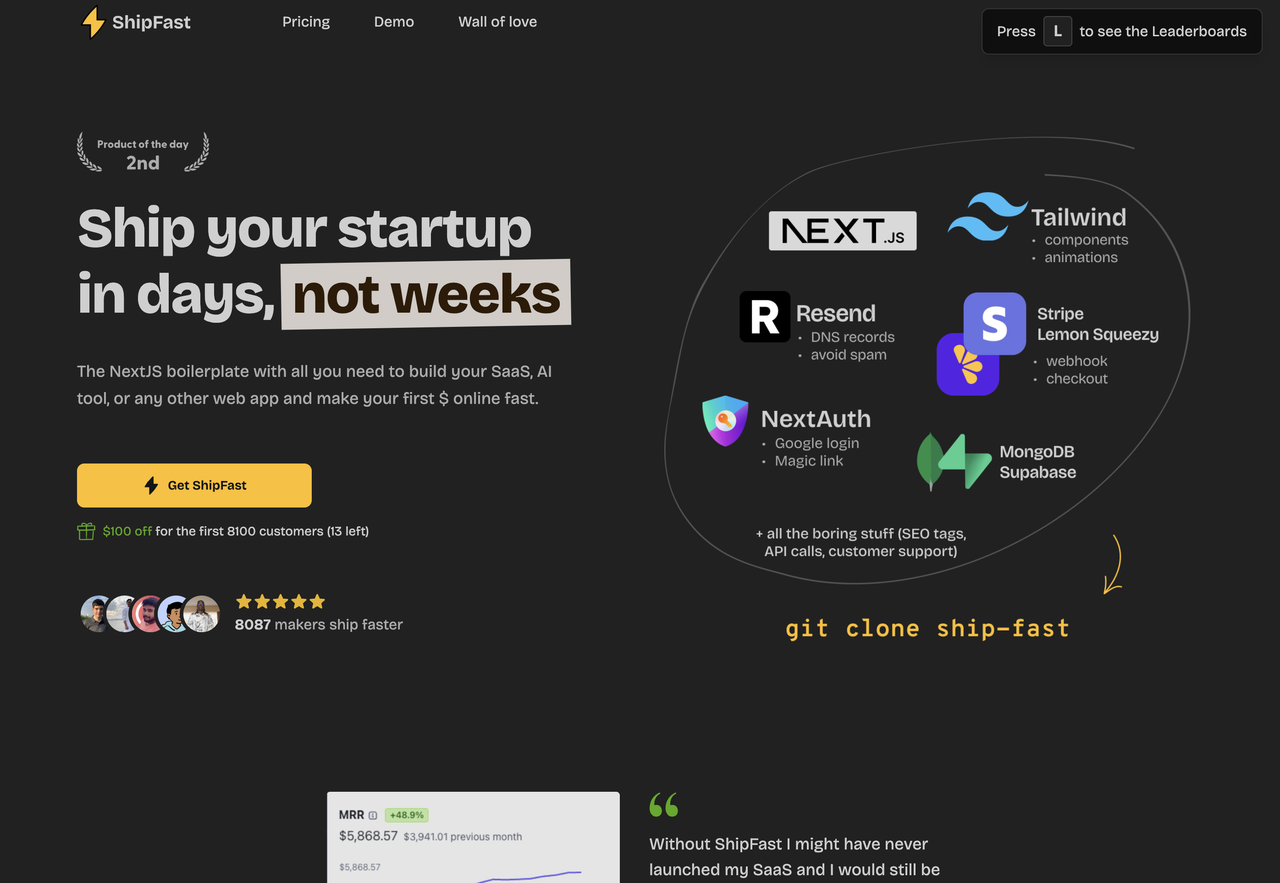
Here's what's included: user login systems, payment processing with Stripe, email setup, a landing page, a blog, UI components, database connections, and more. Basically, it contains all the repetitive, boring code that every developer has to write but that takes many hours. By using Shipfast, developers can save over 20 hours of work. The pricing was simple: $199 for the basic starter pack or $249 for the "all-in" version with Discord community access and $1,210 in partner discounts. Once you buy it, you own it forever—no monthly subscription.
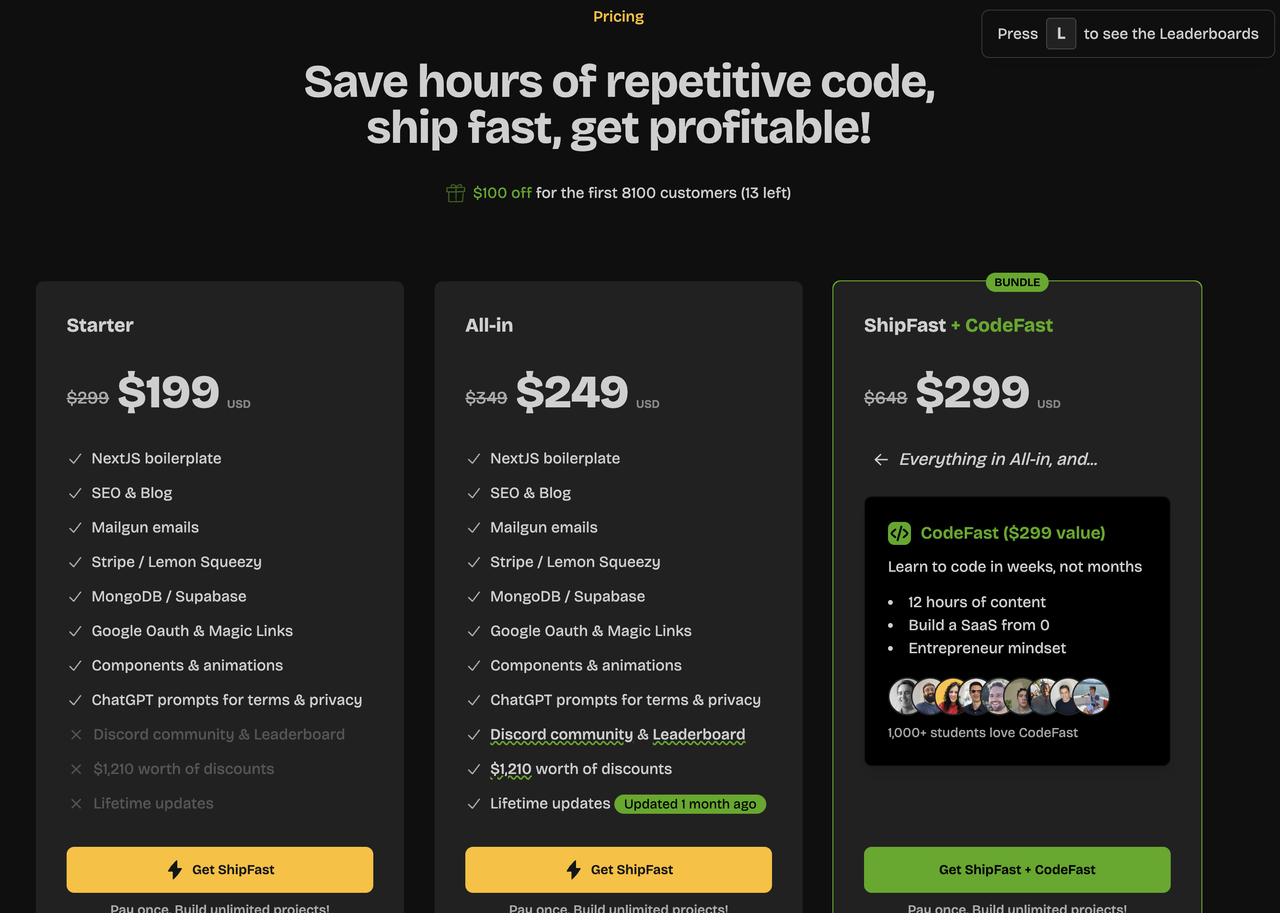 Shipfast pricing
Why the Timing Was Perfect
Marc didn't just get lucky. He was extremely strategic about when to launch.
In 2023, there was massive demand for NextJS boilerplates. NextJS is a popular JavaScript framework that developers love because it's fast and modern. The search interest for "NextJS App Router" exploded by 99 times compared to previous years. Search interest for NextJS boilerplate" jumped 586%. But here's the problem: there wasn't a really great boilerplate available that solved all the problems indie hackers faced. Marc saw this gap in the market. He had already built around 20 different projects using similar code, so he spent one week packaging all this code into Shipfast. He wasn't inventing anything new—he was simply organizing code he'd already written.
Perfect timing + right product = instant demand.
The Three-Part Marketing Strategy That Worked
Part 1: Product Hunt Launch
Product Hunt is a website where people launch new products to a community of early adopters. It's basically a place where tech-excited people go to discover new tools.
When Marc launched Shipfast on August 23, 2023, he didn't just post it and hope for the best. He engaged with other products on the platform, built excitement by announcing the launch on his Twitter account, and made a fun promotional video for his product page.
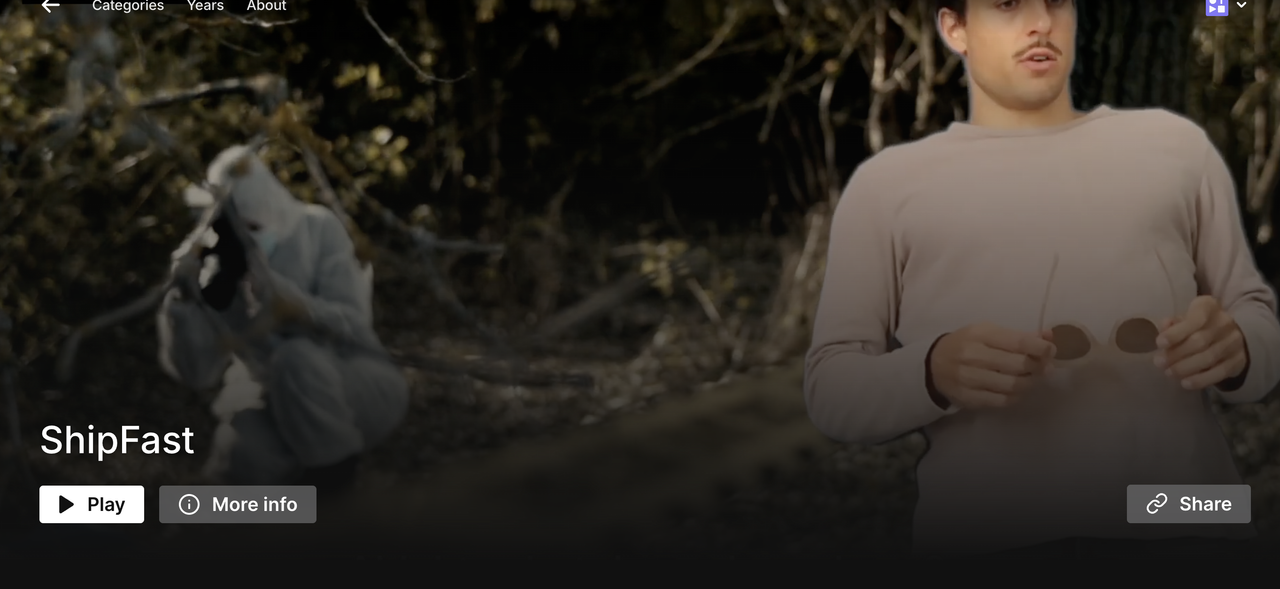 You can watch the promo video here
The results were incredible:
- First 7 hours: $1,000 in sales
- First 48 hours: $6,000 in profit
- Daily ranking: 2nd product of the day with 941 upvotes
- Website visitors: 1,300 visitors in those first 48 hours Product Hunt gave Shipfast credibility. When people saw it ranked highly, more people wanted to check it out. It created momentum.
Part 2: Twitter and "Building in Public"
This is where the real magic happened.
Marc didn't invent "building in public," but he mastered it. The idea is simple: share your work publicly as you build it, share both your wins and your failures, and engage authentically with your community. For two-and-a-half years before launching Shipfast, Marc did this relentlessly on Twitter. He posted updates about his projects. He answered questions from followers. He shared stories about failed products—17 projects failed before Shipfast. He showed his income numbers, his struggles, and his victories. His followers watched him go from making $0 to making $4,000 per month just by shipping quickly. Because of this consistent presence, when Marc tweeted about Shipfast, his followers already trusted him. His launch announcement got 167,000 impressions on a single tweet. By the time Shipfast was launched, over 50% of the website traffic came from Marc's Twitter audience. He had 40,000 followers, and most of them were indie hackers who were exactly the right customers for Shipfast. Here's the critical insight: Marc spent years building an audience before he had a product to sell. Most entrepreneurs do it backward—they build the product first, then wonder why nobody buys it. Marc did the opposite.
Part 3: Organic Community Marketing
The third part of the strategy was sharing the product organically on Reddit and Hacker News—places where indie hackers hang out.
On Reddit, Marc posted a video demo of Shipfast on r/SideProject, a subreddit with 120,000+ members. The post got 100+ upvotes, which meant tens of thousands of people saw it. Again, no paid ads—just authentic community engagement. The pattern was clear: wherever indie hackers gathered online, Marc was there sharing his work authentically.
Why Shipfast Succeeded When Similar Products Failed
After Shipfast launched, dozens of copycat boilerplates appeared. Some were better. Some were cheaper. None succeeded like Shipfast. Here's why:
1. First-Mover Advantage
In August 2023, there was no "go-to" NextJS boilerplate everyone was talking about. Shipfast arrived first when demand was highest. Once people started recommending it, every other product was compared to it—automatically putting them at a disadvantage. It's like how Google became the default search engine: they got there first, and it's hard to dethrone them.
2. Emotional Marketing, Not Just Features
Marc didn't say, "Hey, our boilerplate has Stripe integration and authentication." Instead, he said, "Launch your startup in days, get profitable, and quit your 9-to-5 job." He sold the dream and the outcome, not the technical specs. People don't actually want code. They want freedom. They want to make money. Shipfast promised all three.
3. Real Social Proof
The testimonials on Shipfast's website weren't generic. They were videos of real people—developers in their bedrooms—who actually launched businesses using Shipfast and actually made money. The website even had a "leaderboard" showing which Shipfast customers made the most revenue (verified by Stripe receipts).
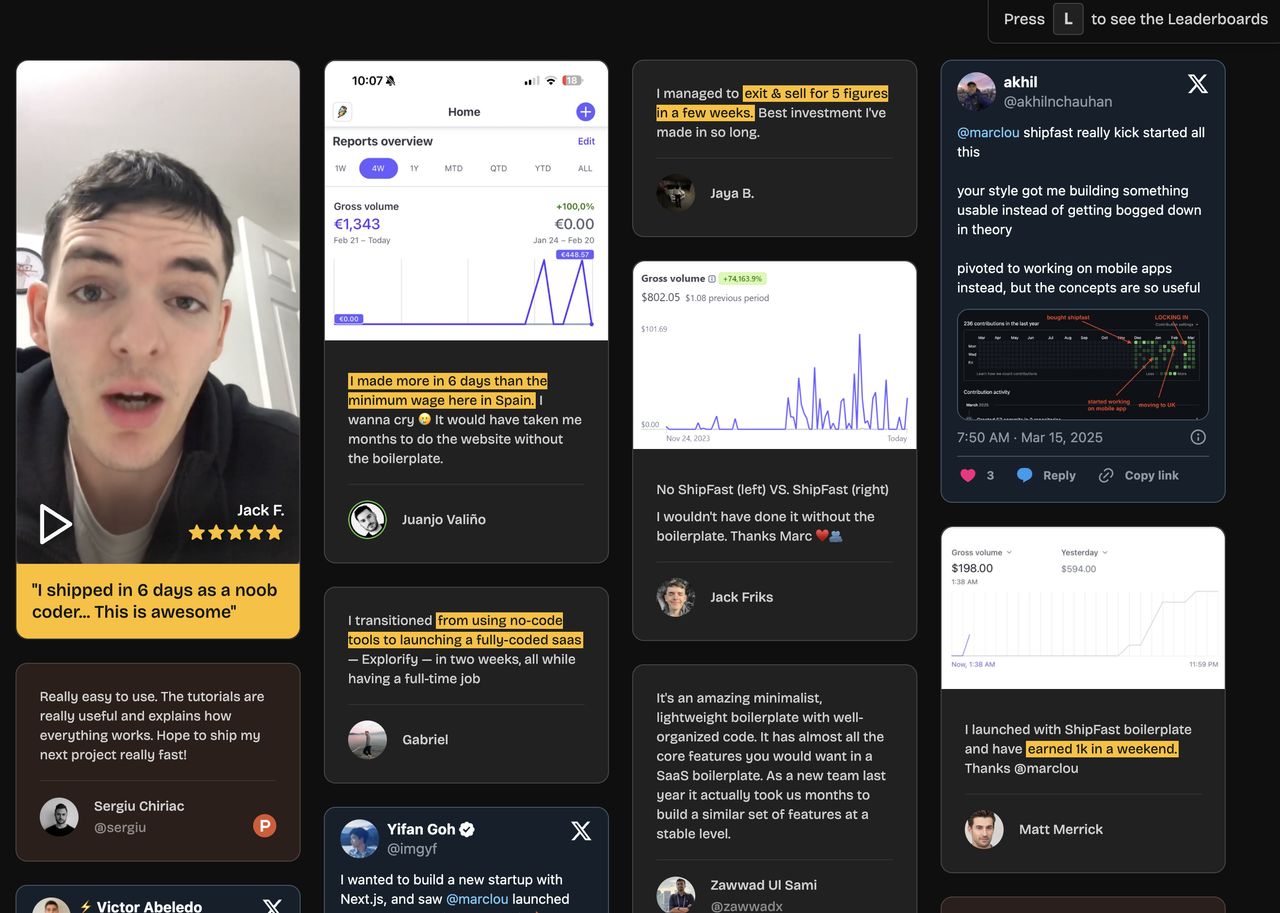
This made a huge difference. People could see it wasn't just a nice-sounding sales pitch—it was real results from real people.
4. Marc's Personal Story
Marc didn't hide his own journey. He was transparent that he went from zero to $4,000/month in 1.5 years by shipping products quickly. He showed his income, his failures, and his wins. This made him relatable. People didn't just buy a product—they bought into Marc's story and wanted to become part of the same community.
5. The Flywheel Effect
Once Shipfast started succeeding, success bred more success. Marc was making $50,000+ per month, which got media attention. Newsletters wrote about him. YouTubers covered his story. Podcasts interviewed him. All this publicity drove more traffic to his website, which created more revenue, which got more coverage.
This is called a flywheel—each spin makes the next spin easier.
.png&w=3840&q=75)
Please sign in to continue reading
We do this to make sure real humans read our stuff, not bots.